
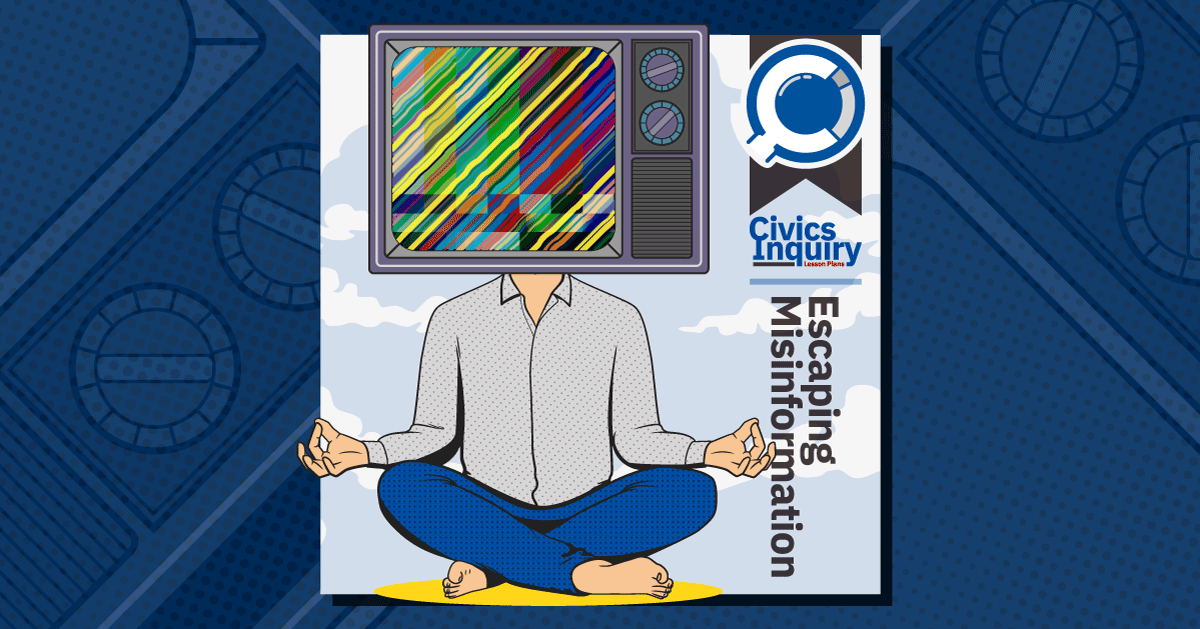
Escaping Misinformation
Consider the sheer volume of information adults and children are exposed to daily, from news and entertainment outlets to social media, texts, and memes. Everyone could benefit from a set of skills and strategies to employ when engaging with each piece of media. Even our youngest media consumers need a toolkit they can turn to when evaluating if a source is reliable. With media literacy tools, students can critically engage with the information they consume and lift up their voices as active and informed citizens.
Lesson Overview
Grades 4–8
One-day lesson, plus one summative assessment
We the People Level 2
Project Citizen Level 1 - Teacher's Guide
Theme 1: Civic Participation
Project Citizen Level 1 - Teacher's Guide
- Appendix A2: What Is Media Literacy
- D3.2.3-5. Use distinctions among fact and opinion to determine the credibility of multiple sources.
- D3.2.6-8. Evaluate the credibility of a source by determining its relevance and intended use.
Theme 1: Civic Participation
- What are the responsibilities and opportunities of citizenship and civic agency in America’s constitutional democracy?
- CCSS.ELA-LITERACY.RH.6-8.8: Distinguish among fact, opinion, and reasoned judgment in a text.
- Critical thinking
- Informed citizen
- Media literacy
- Responsible decision-making
Students will develop responsible decision-making, including caring and constructive choices about personal behavior and social interactions across diverse situations, by examining and applying media literacy skills.
- Examine media literacy strategies
- Determine the credibility of various sources
- Identify factors that make a source reliable
- Students will demonstrate their understanding of media literacy skills by evaluating what makes a source reliable through the escape room activity.
- Students will identify the factors that make a source credible.
- Teachers may assess by using the Assessment Rubric.
- Students will participate in self-reflection by completing the Inquiry Reflection Tool.